
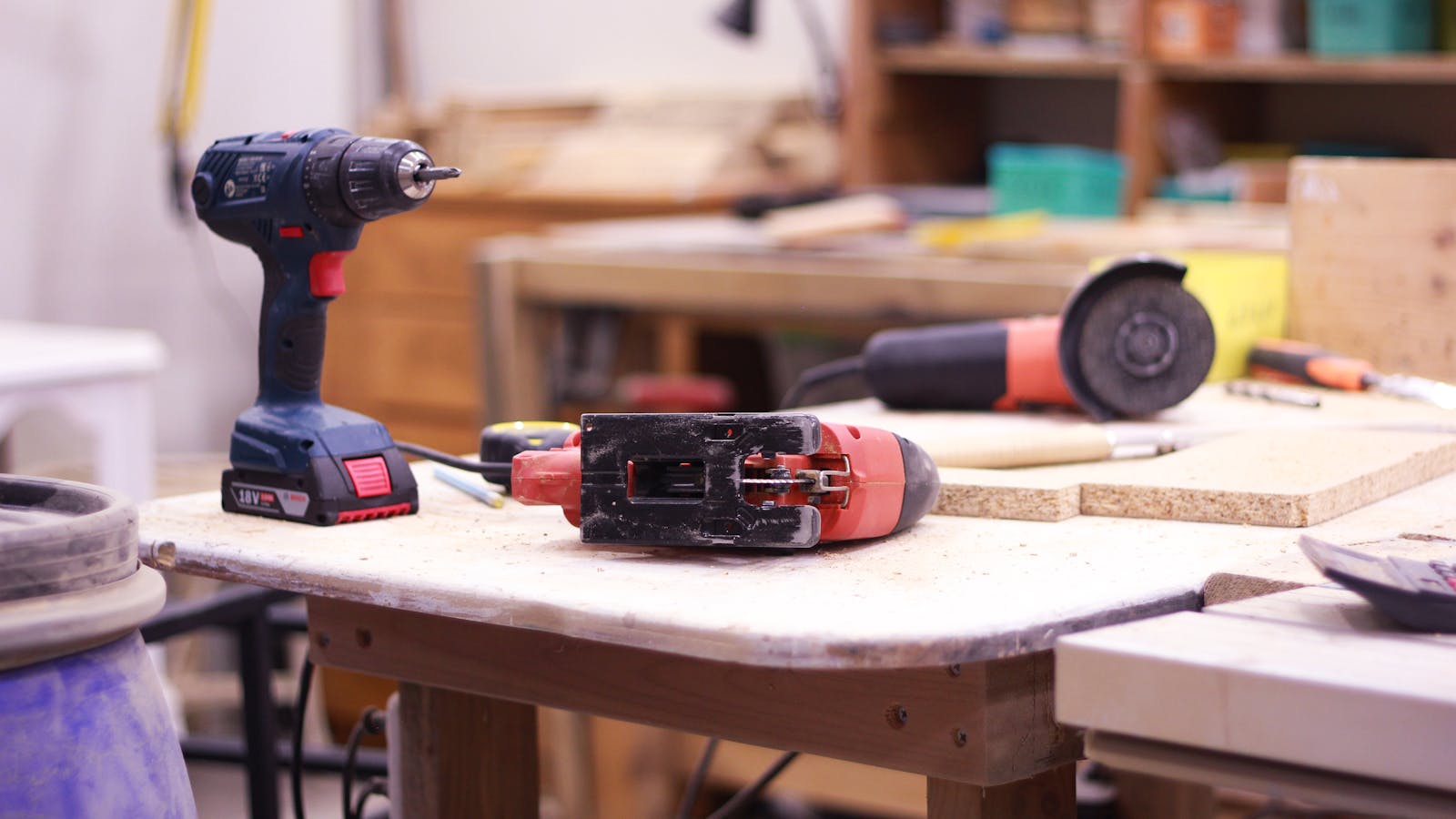
The U.S. tool industry generates roughly $35 billion in retail sales each year, and the major brands file or license thousands of new utility patents each year. If you have a tool invention, a hand tool, a power tool accessory, a garage organizer, a workshop fixture, the brands you would want to license to do scout outside ideas. They just do not advertise it on their homepage.
This post covers how the licensing process works inside tool companies, how to identify which brands are realistic targets for your category, how to structure your outreach, and what royalty and advance numbers fall inside the realistic range. None of this guarantees a deal. The base rate on cold-pitched inventions getting signed is in the low single digits. But you can put yourself in the top 5 percent of submissions by doing the prep work most inventors skip.
Which Tool Companies Do License
Tool companies fall into three buckets on outside inventions.
Open-submission brands. A handful of companies operate formal “submit your idea” portals. They publish review timelines, evaluation criteria, and a standard submission agreement. These are the easiest to approach because the process is documented. They are also the most competitive, because every weekend inventor in North America submits there first.
Selective-licensing brands. Most mid-size and large tool companies do not advertise an open submission program but do license outside inventions through their product development teams. Access requires a warm introduction, a trade show meeting, or an outreach package that gets past the legal-team filter. This bucket is where most successful licensing deals happen.
Pure NIH brands. Some companies have a “not invented here” culture and refuse to look at outside ideas as a matter of policy. The legal exposure of infringing on a rejected submission is too high. You can identify these by their published submission policy, which says some version of “we do not accept unsolicited ideas.”
The first piece of homework on any pitch is figuring out which bucket your target falls into. A 30-minute search of their website, their last five years of patent filings, and a couple of phone calls to their customer-service line produces an answer.
How to Research Who Licenses in Your Category
Three signals tell you whether a company is a realistic licensing target.
Signal 1: Their patent portfolio includes outside-named inventors. Pull a target company’s last 50 issued patents from the USPTO patent search. Look at the inventor field. If most patents list inventors who match the company’s own engineering staff (you can cross-check on LinkedIn), the company develops in-house. If you see independent inventor names with assignment to the company, that is direct evidence of a licensing pipeline.
Signal 2: Their product line has visible gaps. Walk a Home Depot, a Lowe’s, an Ace, or a tool-specialty retailer. Pick your target company’s full SKU range. Where are the holes? A brand that sells five sizes of cordless drill but no drill-attached dust collection accessory has a gap. A company that sells circular saws but no track guide has a gap. Licensing tends to fill product-line holes faster than internal R&D, because the time-to-shelf is shorter.
Signal 3: They show up at trade shows with an “innovation booth” or scout team. The big tool industry shows, the National Hardware Show in Las Vegas, the International Builders’ Show, Total Tech Tools events, all draw scouts from major brands whose sole job is to walk the floor looking for new products. A brand that staffs a scouting team is signaling openness.
The output of this research is a short list. Five to ten companies, ranked. Spend an hour per company. Do not skip this. The mistake most first-time licensors make is mass-emailing 200 brands with the same pitch, one of several common patent licensing mistakes that quietly sink otherwise strong inventions.
What Tool Companies Want
Before you write the first email, understand the buying criteria. A licensing manager at a tool company has three filters.
Margin fit. Tool companies sell through distributors and retailers who take 35 to 50 percent of the retail price. The brand needs to land at a 50 to 60 percent gross margin to fund warranty, marketing, and overhead. If your invention requires expensive materials, complex assembly, or low manufacturing volume that wrecks unit cost, the math does not work. Before you pitch, ballpark your bill of materials at 1,000-unit volume and check whether the math leaves enough room for the channel.
Channel fit. A brand that sells professional contractor tools through specialty distributors is a different buyer than a brand that sells consumer tools through big-box retail. Your invention has to fit the existing channel’s price point, packaging norms, and warranty expectations. A pitch for a $400 professional tool to a brand whose price ceiling is $89 is a wasted email.
Category fit. Most tool companies operate in defined categories: cordless power tools, hand tools, lawn and garden, automotive specialty, woodworking, plumbing, electrical. Submitting a yard-tool idea to a hand-tool brand wastes both sides’ time. Match the category before you write.
A licensing manager who sees these three criteria addressed in your first email will read further. A pitch that ignores them gets filed under “another inventor who didn’t do their homework.”
Cold Email vs Trade Show Booth: Which Works Better
Both work. They work in different ways.
| Channel | First-Contact Cost | Time to Decision | Hit Rate (Industry Estimate) | When It Fits |
|---|---|---|---|---|
| Cold email with sell sheet | Low (under $500) | 30 to 90 days | 1 to 3 percent | Early-stage prospects, broad list |
| LinkedIn message to product manager | Low | 30 to 60 days | 2 to 5 percent | Mid-list, when you know the person |
| Trade show booth meeting | $5,000 to $15,000 | Same day to 30 days | 8 to 15 percent on a good list | Top of your shortlist, demo-ready prototype |
| Warm introduction through licensing agent | Mid (agent commission) | 60 to 180 days | 5 to 10 percent | When you do not have the relationships yourself |
| Industry-association innovation showcase | $1,500 to $5,000 | 30 to 120 days | 4 to 8 percent | Niche categories with active associations |
The hit rates above are rough industry estimates and vary by category, prototype quality, and how well the invention fits the buyer’s filters. They are not promises.
The smart play for most inventors is a sequenced approach. Start with three to five cold emails to your top targets. If those produce interest, you escalate to phone calls and physical samples. If the cold emails go silent, you book a single trade show with a tight-focus list of meetings pre-scheduled and walk in with a working prototype. The choice between running this outreach yourself or hiring a marketing firm hinges on whether you already have the relationships and the time.
Structuring the First-Touch Pitch
The first email should fit on one screen. A licensing manager reads dozens of submissions a week. If your opener takes scrolling, you lose them. Five elements:
The product in one sentence. “A magnetic dust shroud that snaps onto cordless circular saws and routes debris into a vacuum port.”
The problem and the user. Two sentences max. “Pro carpenters cutting drywall on-site lose 30 percent of their cleanup time chasing dust. Existing dust shrouds add tool-changeover steps and do not fit cordless platforms.”
Your design status and IP. “Photoreal renderings and CAD complete for the 7-1/4 inch cordless platform. Provisional patent filed January 2026. Utility application drafting now.”
Why this brand. “Your existing dust collection accessories cover stationary saws but the cordless circular line has no equivalent. This product fills that gap on the SKU list at retail.”
What you want next. “Open to a 15-minute call. I can ship a sample on request.”
That is the entire email. No attachment. No nine-page sell sheet. No royalty math. The goal of email one is to get email two. The detailed package goes when they ask.
Realistic Royalty Numbers
Tool industry royalty rates fall in a tight range. Here is what the market does.
| Deal Type | Royalty on Wholesale | Advance | Term |
|---|---|---|---|
| Standard utility patent license | 3 to 7 percent | $0 to $25,000 | Life of patent or 7 to 10 years |
| Strong patent + working prototype | 5 to 9 percent | $10,000 to $75,000 | Life of patent |
| Design patent (no utility) | 2 to 4 percent | $0 to $10,000 | 15 years |
| Branded co-marketing tie | 4 to 8 percent + marketing budget | $25,000 to $150,000 | 5 to 10 years |
| Buyout / assignment (lump sum) | n/a | $25,000 to $500,000+ | Permanent |
Three things to understand about these ranges.
First, royalties are paid on wholesale, not retail. A tool that retails for $89 may wholesale at $40. A 5 percent royalty on $40 is $2 per unit. Math out your scenario at the wholesale price, not the shelf price, and check it against royalty rates that hold across other industries.
Second, advances are minimums against royalties, not extra money. A $25,000 advance means you get $25,000 at signing, then no further royalty payments until your earned royalties exceed $25,000. If the product never sells, the advance is yours to keep. If the product sells well, the advance is just an early payment of what you would have earned anyway.
Third, deals at the high end of the range require something extra: a strong patent position, a polished design package with engineering already worked out, prior sales traction, or a defensive value to the buyer (preventing a competitor from using the IP). An unfinished concept with thin documentation does not earn a top-of-range royalty, even if it carries a provisional. Strength of the package is what moves the rate.
These numbers are typical of the tool category and not a promise of what your specific deal will pay. Every deal is negotiated.
What to Have Ready Before You Pitch
A serious pitch needs four assets in hand. If you are missing any of them, slow down and build them before you send the first email.
A clean design package. Photoreal renderings and a CAD model showing the product from every relevant angle, with annotated dimensions, materials callouts, and an exploded view of the key mechanism. A licensing manager reads a strong design package the way they read an engineering drawing. A physical works-like prototype helps in some categories but is not a precondition. Major brands routinely sign deals on renderings plus CAD once the engineering is clear and the patent position is filed.
A provisional or utility patent application on file. Even a well-drafted provisional sets the priority date and protects you during the conversation. Without it, anything you disclose can be reverse-engineered, designed around, and built without paying you a cent. The USPTO documents what a provisional application covers and how the 12-month priority window works. Filing a provisional costs $300 to $2,500 depending on whether you draft it yourself or use a patent attorney.
A one-page sell sheet. A clean rendering of the product, problem statement, target user, three benefits, suggested retail price, and your contact info. One page, with clean design. Not 12 pages of hand-drawn sketches.
A short animated walkthrough. A 30 to 60 second motion piece that shows the product in use, the problem it solves, and the result. This can be a rendered animation built off the CAD model or a clip of a working unit if you have one. Motion holds a licensing manager’s attention longer than static images.
If you are working with a product design firm like Enhance Innovations, founded in 2010 and based in Champlin, Minnesota, the pitch package is a deliverable on most of our licensing-track engagements. The design renderings, CAD package, sell sheet, and patent illustrations are part of the standard handoff. Our in-house licensing rep then carries that package to potential licensees on a contingency basis, which means the rep is paid out of royalties earned rather than upfront fees.
What Happens After “We’re Interested”
If a target brand responds with interest to the first email, the second-stage process tends to follow a predictable arc.
Week 1 to 4: Sign a one-way NDA. Send the detailed package. Brand assigns a product manager and an engineer to evaluate.
Week 4 to 12: Brand requests a sample for hands-on review. They run an internal product-fit meeting. They ask for more technical detail, manufacturing cost estimates, and patent status.
Week 12 to 24: If the brand is moving forward, they put together a term sheet. The term sheet includes royalty rate, advance, term, exclusivity, milestones, and exit clauses. This is where you negotiate the patent license.
Week 24 to 36: Long-form license agreement drafted, redlined, signed. Brand begins manufacturing planning, often 6 to 12 months before product is on shelf.
Week 36+: Product launches. Royalty checks begin once units sell.
Most deals take 12 to 18 months from first contact to first royalty check. Inventors who expect a decision in 30 days lose patience and take worse deals than they should. Plan for the long arc.
When to Walk Away From a Deal
Three deal terms should make you walk.
No clear minimum royalty or sales milestone. Without a minimum, the brand can shelve your product after launch and pay you zero. A reasonable minimum looks like $5,000 to $25,000 per year after year 2. If they refuse a minimum, they are not committed.
Lifetime exclusivity with no termination clause. A perpetual exclusive license that you cannot revoke is in effect a buyout at royalty rates, with all the downside risk on you. There must be a path to terminate if they stop performing.
No audit rights. You need the right to audit the brand’s sales records once a year. Without it, you are taking their royalty statement on faith.
A good attorney costs $3,000 to $8,000 to redline a tool licensing contract. That is a small fraction of what a bad clause can cost you over the life of the deal.
Frequently Asked Questions
Q: How long does a tool licensing deal take from first contact to signed agreement?
A: 12 to 18 months is typical. Faster deals (under six months) tend to involve a brand that has been hunting for the exact category fill your invention provides. Slower deals (over 24 months) tend to mean the brand is uncertain or the negotiation got stuck on a clause.
Q: Do I need an issued patent or is a provisional enough?
A: A provisional patent application is enough to start licensing conversations. Companies regularly evaluate and license inventions covered by a provisional. The provisional locks in a priority date and gives you 12 months to convert to a utility application, and that conversion often happens once a license deal is in motion. Some licensees will even contribute to or trigger the utility filing as a milestone in the deal. An issued utility patent gives you a stronger position at the negotiating table, but it is not a prerequisite to pitching.
Q: Should I use a licensing agent or pitch direct?
A: An agent often takes 25 to 40 percent of royalties for life of deal. Worth it if the agent has direct relationships at your target brands and you do not. If you can do the research and outreach yourself and you have an industry network, going direct keeps the full royalty.
Q: What does it cost to file a provisional patent on a tool invention?
A: $300 to $700 if you draft it yourself and pay just the USPTO fee. $1,500 to $4,000 if you use a patent attorney. The attorney version is worth the cost for a license-bound invention in nearly every case.
Q: What if my idea is similar to something a brand already has?
A: Then your pitch needs to make the differentiation explicit. “Faster” is not enough. Specific, measurable improvements in cost, performance, or user experience that the existing product does not deliver are what move a licensing deal forward.
Q: Can a Minnesota firm help me with the licensing process?
A: Enhance Innovations represents inventors in licensing deals on a contingency basis from our Champlin, Minnesota office. We work with inventors across the US and Canada. Most engagements happen by video call and email, with optional in-person visits when an inventor wants to meet the team. Geography is rarely a factor in modern licensing work. What matters is the strength of the design package and the relationships with potential licensees. Our deliverables include design renderings, the CAD package, the sell sheet, the patent illustrations, and the brand outreach handled by our in-house licensing rep.
Working With Enhance Innovations on a Tool Pitch
Enhance Innovations builds the design package and pitches it to potential licensees on your behalf. The design work runs in the $7,500 to $8,000 range for our Sapphire-Gold engagement, which produces the renderings, CAD files, sell sheet, and patent illustrations a serious tool pitch requires. Our in-house licensing rep then takes that package to brands in your category on a contingency basis, paid out of royalties earned rather than upfront fees. If a deal closes, the rep earns a share. If it does not, you owe nothing beyond the design work.
We do not guarantee a deal. No firm that tells you otherwise is being honest. What we offer is a serious package, real relationships with product managers across the major tool brands, and a fee model that keeps us motivated to keep pitching.