
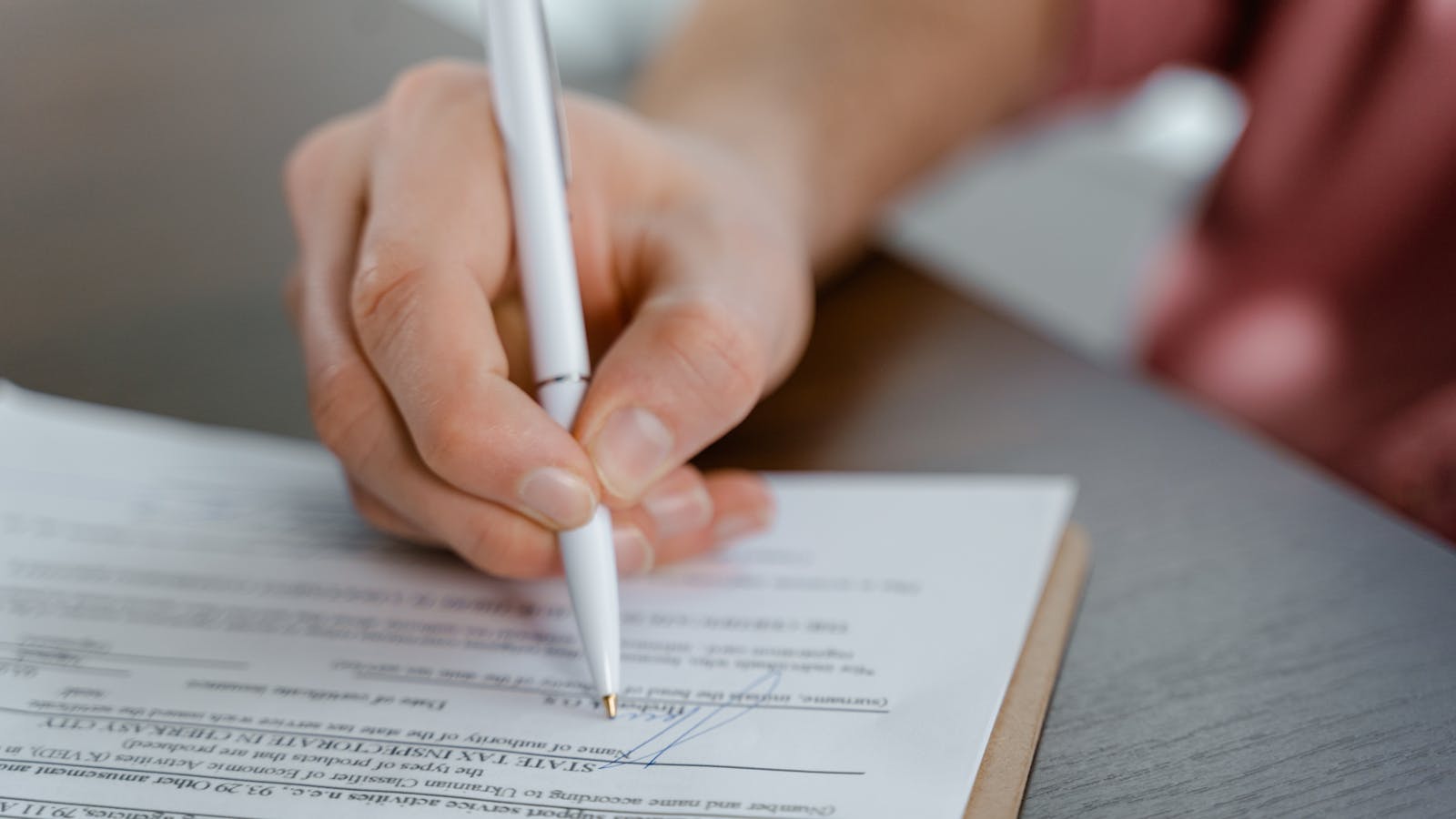
A typical patent license agreement runs 25 to 60 pages. The terms that matter most to the inventor sit in about ten clauses, and the cost of getting one of those clauses wrong can run into six figures over the life of the deal.
If you have a patent and a licensee at the table, this guide walks through the sections you will see in the draft contract, what each one means in plain language, and where independent inventors get burned. If you are earlier in the process, our guide on how a patent license works for independent inventors covers the steps before a contract lands on the table. Enhance Innovations works on inventor licensing deals from our Champlin, Minnesota office. The team has supported inventor licensing since the firm was founded in 2010, and the same handful of clauses cause most of the disputes.
The Grant Clause: What Rights You Are Transferring
The grant clause sits near the front of the contract and sets the entire deal in one paragraph. It defines what the licensee gets to do with your patent.
Read this clause for three pieces of information. First, which patents are covered? List the U.S. patent number and any pending applications, foreign filings, and continuations. If you license one patent and a continuation issues afterward with broader claims, you want clarity on whether that continuation is included. Second, what activities are licensed? Make, use, sell, offer to sell, import. A complete grant covers all five. A partial grant might cover manufacturing alone, leaving sales rights with you. Third, where do the rights apply? The territory clause covers this in more detail, but the grant clause should reference it.
A clean grant clause names the licensed patents in a schedule, references the territory and field-of-use clauses, and states whether the license is exclusive or non-exclusive. If the contract you receive does not name specific patent numbers, ask why.
Term and Termination: How Long the Deal Runs
The term defines how long the license stays in force. Most patent licenses run for the life of the licensed patents, so a U.S. utility patent filed in 2026 with a 20-year term gives a license that ends near 2046, plus any patent term adjustment.
Watch for two things. First, automatic renewal language. Some contracts auto-renew for additional terms unless one party gives notice. This sounds neutral but favors whoever is performing well at the renewal date. Second, the termination triggers. A standard contract lets either party terminate for material breach after a 30 to 60 day cure period. The inventor wants additional termination rights tied to performance. If the licensee does not launch within 18 months, or fails to hit minimum royalties for two consecutive years, the inventor should get the patent rights back.
The performance-based termination right is the single most important protection in any exclusive license. Without it, a licensee can sit on your patent and pay nothing while blocking competitors. We have seen inventors lose ten years of commercial life waiting for a licensee who never planned to launch.
Territory: Where the License Applies
Territory defines the geographic scope. United States only, North America, Worldwide. Each option carries different implications.
A U.S.-only license preserves your right to license other countries to other parties. Common when the licensee is a domestic manufacturer with no international distribution. A worldwide license consolidates everything with one licensee, easier to manage but lower total royalty potential if the licensee underperforms in any region.
If you sign a worldwide deal, attach country-specific minimum royalties or country-specific termination rights. A licensee that sells well in the U.S. but never enters Europe should not hold European rights forever. Carve out underperforming territories with a use-it-or-lose-it provision.
Exclusivity: One Licensee or Several
The exclusivity clause states whether the licensee is the only one with rights, or one of several. The choice drives royalty rate, deal value, and ongoing flexibility.
An exclusive license commands higher royalty rates and bigger upfront payments because the licensee gets the whole market. The trade-off is that you cannot bring in a second licensee, even one with different distribution channels or a different customer base. A non-exclusive license lets you sign multiple deals at lower rates per licensee, but most companies will not invest much in marketing and distribution if they know competitors can license the same patent.
The middle path is the field-of-use exclusive license. The licensee gets exclusive rights in a defined field (kitchen products, automotive aftermarket, professional landscaping) while you retain the right to license other fields to other companies. Define the field with care. Vague language like “consumer applications” leads to disputes when the licensee expands into adjacent categories. Our guide to exclusive vs non-exclusive patent licensing walks through how to choose between these structures.
Royalty Rate and Royalty Base
The royalty section is the financial heart of the contract. Two numbers govern it: the rate and the base.
The rate is a percentage. Industry norms range from 2% to 10% on net sales for most consumer product categories. Higher rates appear in toys, pharmaceuticals, and software. Lower rates appear in commodities like food and personal care. Our breakdown of patent royalty rates by industry covers the benchmarks category by category.
The base is the dollar figure the rate applies to. This is where contracts vary, and where inventors lose money. Three common bases appear:
| Royalty Base | Definition | Inventor Position |
|---|---|---|
| Gross sales | Total invoiced sales before any deductions | Best for inventor, seldom accepted by licensees |
| Net sales | Gross minus returns, allowances, freight, and taxes | Standard middle ground; define each deduction with care |
| Net profit | Net sales minus cost of goods and overhead | Worst for inventor, almost impossible to audit |
Insist on net sales as the base. Then nail down the definition of net sales in two paragraphs. List every allowed deduction. State that no deduction may exceed industry norms (typical caps: 2% returns, 3% trade discounts, freight at actual cost). Without these caps, a licensee can engineer “net sales” downward through aggressive accounting.
Minimum Royalties and Sales Performance
A minimum royalty obligation requires the licensee to pay you a floor amount each year regardless of actual sales. Without minimums, a licensee with an exclusive license can sit on the patent and pay nothing. Minimum royalties force the licensee to either commercialize or release the patent.
Typical structures escalate over time. Year one might have no minimum (launch year, sales build). Year two ramps to $25,000. Year three steps to $50,000 or 50% of projected sales, whichever is greater. Year four onward escalates further.
Pair minimums with a termination right. If the licensee fails to pay the minimum in any year, you can either accept the shortfall and continue, or convert the license to non-exclusive, or terminate the license entirely. Spell out which option triggers on its own and which requires written notice. Most inventor-friendly contracts give the inventor the choice at the time of breach. These are the kind of terms that get settled during negotiation, and our guide to how to negotiate a patent license covers the levers in detail.
Audit Rights: Verifying What You Are Paid
The audit clause lets you (or an accountant working for you) inspect the licensee’s books to verify royalty calculations. Without an audit clause, you accept whatever the licensee tells you.
A standard audit clause includes four elements. First, the right to audit no more than once per year, with reasonable notice (30 to 60 days). Second, the audit is at the inventor’s expense unless the audit finds an underpayment of 5% or more, in which case the licensee pays. Third, all records must be retained for at least three years, sometimes five. Fourth, the licensee must pay the underpayment plus interest within 30 days of audit findings.
The audit clause is the second most negotiated section after royalty rate. Licensees push back on audit frequency, the underpayment threshold, and the records retention period. Hold firm on the 5% threshold. Anything higher (10%, 15%) makes audits cost more than they recover.
Indemnification and Liability
Indemnification answers the question: if someone sues over this product, who pays?
Two types of indemnification appear in patent licenses. The inventor indemnifies the licensee against patent infringement claims (a third party claims your patent infringes their patent). The licensee indemnifies the inventor against product liability claims (a customer sues because the product injured them).
Push hard on the second one. Product liability exposure can run into millions of dollars. As the inventor, you want the licensee to carry product liability insurance naming you as additional insured, with coverage of at least $2 million per occurrence and $5 million aggregate. The contract should require proof of insurance on signing and at each renewal.
On the patent infringement side, cap your indemnification at the total royalties you have received. A typical clause states: “Inventor’s indemnification obligation under this section shall not exceed the total amounts paid by Licensee under this Agreement.” Without this cap, a single infringement suit could wipe out years of royalty payments.
Improvements and Future Patents
The improvements clause governs what happens when one party (often the licensee) improves on the licensed invention. Two structures dominate.
Grant-back to inventor. The licensee assigns or licenses any improvements back to the inventor. This protects the inventor’s long-term position because the licensee cannot use improvements as a bargaining chip at renewal. Almost no licensee accepts a full grant-back today.
License-back to licensee. The inventor’s improvements (new patents you file on the same invention) get licensed to the licensee under the same terms. This is more common. Limit it to direct improvements on the specific invention, not adjacent inventions. Otherwise, your next product could end up under the same license at the old royalty rate.
The cleanest position is silence on improvements with a clear definition of which patents are covered by the original license. Anything filed outside that definition belongs to whoever filed it.
Dispute Resolution
The dispute resolution clause covers what happens when the parties disagree. Three options appear in most contracts.
Litigation in a specified court. The contract names a state and county where any lawsuit must be filed. Pick a forum convenient to you, not to the licensee. If the licensee is in California and you are in Minnesota, fight for Minnesota or a neutral state.
Arbitration. Disputes go to a private arbitrator instead of court. Faster and cheaper, but the decision is binding with limited appeal rights. Specify the arbitration body (American Arbitration Association is standard), the rules (commercial arbitration rules), and the location.
Mediation first, then arbitration or litigation. The parties must attempt mediation before any other proceeding. This adds a 30 to 60 day cooling-off period and resolves many minor disputes without escalation.
The forum and choice-of-law decision affects everything that follows. Get this right at signing. Renegotiating jurisdiction after a dispute starts is impossible.
The Boilerplate That Matters
The last several pages of every patent license contain “boilerplate” provisions that look generic but carry weight.
Assignment. Can the licensee transfer the license to another company? Most inventors want assignment restricted to a successor that buys most of the licensee’s business. Otherwise, the licensee can sell the license to a competitor or a non-operating entity. Notice. How are formal communications delivered? Email plus certified mail to listed addresses, with a 5 to 10 day delivery presumption. Force majeure. What events suspend obligations? Pandemic clauses got rewritten across the industry after 2020. Read this section in detail if you have minimum royalty obligations. Entire agreement. States that this contract supersedes all prior discussions. Make sure any side-letters or schedules you negotiated are referenced.
Boilerplate is not boilerplate. It is the contract.
FAQ
How long does it take to negotiate a patent license agreement?
Most deals close in 60 to 120 days from term sheet to signed contract. Faster if both parties have negotiated similar deals before. Slower if either side brings new lawyers in mid-process.
Should I hire an attorney to review the agreement?
Yes. Patent license review by an experienced licensing attorney costs $3,000 to $10,000 and identifies issues that would cost you tens of thousands over the contract term. The licensee will use their attorney either way.
Can I negotiate the royalty rate after signing?
Almost never, unless the contract has a built-in renegotiation trigger (failure to hit minimums, change in market conditions). Negotiate the rate at signing. The first contract sets the precedent for any renewal.
What happens to the license if the patent gets invalidated?
The contract should address this. A patent can be challenged on prior art uncovered through a USPTO patent search, which is why a clean search before filing matters. Royalties stop for the invalidated patent, but if other patents are licensed, royalties continue on those. Some contracts have a partial-invalidation clause that adjusts the rate.
Do I have to grant exclusive rights to get a meaningful royalty?
No. Non-exclusive deals with multiple licensees can produce more total royalty than a single exclusive deal, above all for technologies that span industries. The right structure depends on the invention.
If you have a license offer in front of you and want a second opinion before signing, the Enhance Innovations licensing representation team has reviewed inventor license contracts from our Champlin, Minnesota office since 2010. The clauses above are where we look first. If you have not filed yet, the low-friction first step is a $399 patent search to confirm your invention is worth taking to a licensee at all.